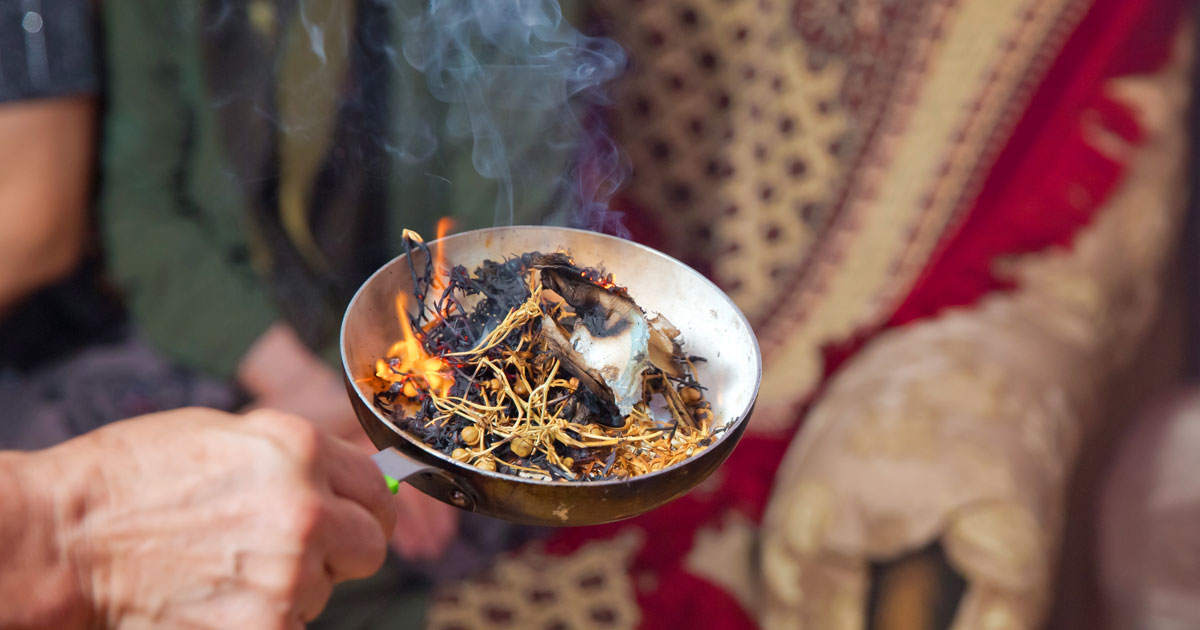
In almost every Iranian home, dried brown seeds are still cast onto glowing coals to ward off the evil eye – and almost no one realises they hold the same kind of visionary chemistry as the Amazonian brew ayahuasca. This is Syrian rue (Peganum harmala), known in Iran as espand, the plant that chemical engineer and VCENNA founder Dr. Shauheen Etminan argues was the true botanical heart of Haoma, the sacred “Elixir of Truth” once drunk by Zoroastrian priests. This article traces Haoma from the ancient hymns of the Avesta to the modern pharmacology lab, following four otherworldly journeys and a 200-year search for what the magi actually drank.
What Was Haoma, the Elixir of Truth?
The oldest layers of Zoroastrian scripture speak of Mēnôg, an invisible realm of pure thought and wisdom that lies beyond the physical world. In the mystical traditions of later Iran – the world the poets Rumi and Hafez called M’ana – a vision of this spirit world was understood to arrive only through divine grace, as a reward for saintliness. Ancient Zoroastrian priests took a more direct path. They drank an inebriating botanical extract called Haoma, believed to let the priest enter the spiritual realm and converse with the divine before death. The ritual is described in the Avesta itself.
Most references frame Haoma’s effect as the “Elixir of Truth”: an altered, induced mindlessness that lets the mind grasp deep truths, described as a special illumination and an incorporeal psychic vision beyond ordinary language and perception. It opened a glimpse into the after-death realms – but only for the righteous. A second strand of the texts records a different register entirely: exhilaration, fury and a warlike spirit roused among warriors. Haoma was drunk only in ritual settings, charged with sacred power. The word itself derives from a root meaning “to press out,” suggesting that what mattered first was the juice or extract, not any single named plant.
The Magi and Their Otherworldly Journeys
The Greeks called the priests of Persia magi because they believed them to be sorcerers wielding supernatural powers – and it is from this word that “magic” itself descends. Magic, in the most literal sense, was the art of the magi. That art was a mastery of seeing into Mēnôg, the spirit world, and of “dying before death” so that visions of the unseen could be carried back to the living. According to the scholarship the paper draws on, these visions in ancient Iranian religion were not attained through meditation or saintly reward but through the consumption of Haoma.
The practice was carefully bounded. Haoma was restricted to the caste of priests and those the magi chose to enrol – priests, kings, and recognised righteous ones. The extract was prepared in the Yasna ritual by a senior priest, and the one who drank it, the Zoatar, did so under the scrutiny of additional priests who judged, by how he surrendered to the elixir’s effects, whether he was truly among the righteous. The journeys themselves were said to unfold in a dreamlike state the texts name xvafena. The paper presents four such accounts, each tied to drinking a mind-altering potion: the revelation of Zarathustra; the conversion of King Wishtasp; the visions of the chief priest Kerdir; and the most detailed of all, the journey of Arda Viraz.
There have been several speculations about the botanical identity of haoma. Among these candidates, the only one that mysteriously has secured its place in the house of every Iranian, including today’s population with 98% non-Zoroastrian, is Peganum Harmala!
— Dr. Shauheen Etminan, PhD
Arda Viraz and the First “Set and Setting”
The richest Iranian account of hallucinogenic intoxication for religious purposes belongs not to a priest or king but to Viraz, an ordinary man chosen for his righteousness. The Arda Viraz Namag, the Letter of the Righteous Viraz, is a Pahlavi text composed centuries before Dante – an Iranian “Divine Comedy” mapping the soul’s passage through heaven and hell. It was written in a time of religious doubt: an assembly of magi gathered at a fire temple in Fars and resolved to send a single righteous voyager into the spirit world to confirm whether their rituals were true.
What makes the account so striking to modern readers is how deliberately the conditions were managed. Viraz was given leisure to set his intentions by the fire, ate ritual bread, put on clean garments and perfume, and lay down on a fresh blanket on a wide, prepared stage. Only then was he handed three measured cups of the potion known as “Mang of Wishtasp.” For seven days and nights his sisters and the assembled magi kept the fire burning, recited liturgies, and watched over his body until he woke calm and joyous, bearing greetings from the divine. As the paper observes, the three pillars of twenty-first-century psychedelic psychotherapy – set, setting, and dose – were all accounted for in this ancient ceremony.
The 200-Year Search for the Plant
Speculation about what Haoma actually was has run for more than two centuries. Proposed candidates have included the fly agaric mushroom (Amanita muscaria), ephedra (Ephedra sinica), black henbane (Hyoscyamus niger), the psilocybin mushroom, cannabis, and wild rue (Peganum harmala). Much of the difficulty is built into the history: the Indo-Iranians shared one sacred formulation before they separated, but after migration the differing flora of the Iranian plateau and the Indian plain meant the same plant could not always be found. The name endured while the ingredient drifted.
The most famous mushroom theory came from R. Gordon Wasson, who argued in 1971 that Soma was Amanita muscaria. Yet the paper notes the awkward problems: the mushroom can simply be eaten without “pressing out,” it produces no incense, and it is best known as a deliriant that yields an unreliable, often unpleasant state rather than the lucid dream-visions the magi described. Ephedra, the leafless mountain plant that present-day Zoroastrian priests still press as Hôm, fits the dry highland flora – but its active compound, ephedrine, is a stimulant that wards off sleep rather than inducing the dreamy trance of the texts. Neither candidate matches the magi’s reported experience.
Espand: The Case for Peganum harmala
This is where espand – Peganum harmala – makes its case. In their landmark 1989 study Haoma and Harmaline, ethnopharmacologist David Flattery and Old Avestan linguist Martin Schwartz concluded that the compound responsible for Haoma’s dreamlike, visionary state was Peganum harmala. Several threads converge on it. The Farsi name “espand” descends from an Avestan word meaning “possessing productive numinous power,” fitting its sacred and protective role. The plant grows wild and abundant across the Iranian plateau; its seeds grind easily in a mortar and burst over fire into fragrant smoke; and its aqueous extract runs yellow, matching the Avesta’s description of Haoma’s colour.
Crucially, espand alone satisfies Haoma’s dual identity – both an inebriating drink and a protective substance burned for its smoke – a duality the Gathas themselves seem to reference. The paper’s broader argument is subtler than naming one plant: the magi appear to have been skilled formulators, blending the dream-inducing beta-carbolines of espand with other plants such as henbane and ephedra to tune different experiences for different rituals. Espand, on this reading, was the visionary core, and the later substitution of milder plants helps explain how its original identity was eventually obscured and forgotten.
The Chemistry of Beta-Carbolines
The pharmacology is what ties the ancient and modern accounts together. The psychoactive alkaloids in Peganum harmala are beta-carbolines – chiefly harmine, harmaline, and tetrahydroharmine – the very same family found in ayahuasca’s Banisteriopsis caapi vine. Harmine and harmaline act mainly as monoamine oxidase inhibitors, slowing the enzyme that breaks down neurotransmitters and thereby prolonging their effect. Less familiar is their strong affinity for imidazoline receptors, which the paper suggests may underlie the distinctive oneirophrenic, or dream-generating, quality of the experience.
The clearest bridge to lived experience comes from Claudio Naranjo’s pioneering 1960s studies of harmaline. His subjects reported physical relaxation, a withdrawal from the surroundings, and vivid visual imagery unfolding as a meaningful dreamlike sequence – recurring images of animals, archetypal figures, and circular patterns evoking oneness. Where tryptamines amplify active, high-energy thinking, beta-carbolines do the opposite: they quiet the mind into a hypnotic, outwardly sleep-like trance. That portrait of an awake-yet-dreaming state lines up closely with the magi’s own descriptions of xvafena, suggesting the ancient reports and the modern pharmacology are describing the same thing.
Frequently Asked Questions
What is Haoma?
Haoma was a sacred, intoxicating botanical extract central to ancient Zoroastrian ritual in Iran, described in the Avesta as an “Elixir of Truth.” Priests drank it to enter an altered, visionary state and to glimpse Mēnôg, the invisible spirit world, communicating with the divine before death. Its Vedic counterpart in India was called Soma. The word derives from a root meaning “to press out,” indicating that Haoma was understood first as a pressed juice or extract rather than a single named plant – which is why its exact botanical identity has been debated for over two centuries.
Is Haoma the same plant as Peganum harmala?
Many scholars believe so. In their 1989 study Haoma and Harmaline, David Flattery and Martin Schwartz concluded that the compound responsible for Haoma’s visionary, dreamlike effect was Peganum harmala – espand, or wild rue. Dr. Etminan’s paper supports this, arguing that espand alone fits Haoma’s dual role as both a drink and a protective incense, its yellow extract, its abundance on the Iranian plateau, and the pharmacology of the experience. The fuller picture is that the magi likely blended espand with other plants, with Peganum harmala as the visionary core.
What is espand and why do Iranians burn it?
Espand is the Farsi name for Peganum harmala, wild rue. Across Iran – in a population that is now roughly 98% non-Zoroastrian – people still burn its dry brown seeds for their fragrant, purifying smoke. The custom is meant to avert the evil eye and keep negative energies of jealousy and rivalry away from daily life, and it appears at weddings, gatherings and ordinary homes alike. Remarkably, most people performing this everyday ritual are unaware that the same seeds contain potent psychoactive beta-carboline alkaloids.
How did Zoroastrian priests use Haoma?
Haoma was reserved for the priestly caste and chosen righteous individuals, including kings. It was prepared during the Yasna ritual by a senior priest, then drunk by the Zoatar under the watch of additional priests who judged, by his response, whether he was truly righteous. The resulting visions unfolded in a dreamlike state called xvafena. The most detailed account, the journey of Arda Viraz, shows the care involved: intention-setting by the fire, ritual preparation, three measured cups, and seven days of attentive watching – an early parallel to modern “set, setting, and dose.”
Is Peganum harmala dangerous?
It is not a casual substance. The beta-carbolines in espand can cause nausea, vomiting, diarrhoea, headache, tremor and body numbness, and the ancient texts themselves record priests being sick after consuming Haoma. More seriously, harmine and harmaline are monoamine oxidase inhibitors, a class of compounds with well-documented and potentially dangerous interactions with certain foods, medications and other substances. The traditional context surrounded its use with strict ritual control and experienced supervision. This article is educational and historical; it is not guidance for consumption.
Was Soma really the fly agaric mushroom?
That was R. Gordon Wasson’s influential 1971 claim, but the paper finds the reasoning weak. The fly agaric (Amanita muscaria) can be eaten directly without being “pressed out,” produces no incense, and is chiefly a deliriant – known for confusing, often unpleasant effects rather than the lucid dream-visions the magi described. Terence McKenna noted that Wasson himself never had an ecstatic experience with it. The mushroom also will not grow in the dry northeastern and eastern Iranian regions where the Indo-Iranian settlers lived, making it an unlikely source for Haoma specifically.
How do beta-carbolines like harmine and harmaline work?
Harmine and harmaline are primarily monoamine oxidase inhibitors. Monoamine oxidase normally breaks down neurotransmitters such as serotonin; when it is blocked, those neurotransmitters remain active longer, amplifying their effect. The compounds also bind strongly to imidazoline receptors, which the paper suggests may help explain their distinctive dream-generating quality. Behaviorally, beta-carbolines quiet active thinking and induce lethargy, withdrawal and a hypnotic, outwardly sleep-like trance – the opposite of stimulating tryptamines – which matches the magi’s accounts of an awake-yet-dreaming visionary state.
Where can I learn about ethnobotany and visionary plants properly?
The McKenna Academy Living Library offers in-depth courses that keep the culture, history and science of sacred plants together rather than stripping them apart. You can explore ethnobotany with researchers like Michael A. Coe and Wade Davis, study the chemistry of visionary plants with Dennis McKenna, and trace plant-medicine traditions across cultures – from Amazonian ayahuasca to the wider story of beta-carbolines and consciousness. It is a place to study these traditions with rigor, context and respect for the communities who hold them.

Shauheen Etminan, PhD
Chemical Engineer · Founder of VCENNA
Shauheen Etminan is the founder of VCENNA, a CNS drug-discovery biotech company focused on the poly-pharmacology of natural neuro-pharmaceuticals for mental wellness. An inventor and repeat founder with a portfolio spanning multiple industries, he holds a PhD in chemical engineering from the University of Calgary. His ESPD55 research brings modern neuropharmacology together with the most recent translations of ancient Avestan texts to re-examine the botanical identity of Haoma.
Chemically-induced otherworldly experiences of Zoroastrians in Iran – ESPD55
Dr. Shauheen Etminan · 1 hr · McKenna Academy
McKenna Academy · Living Library
Go Deeper with Ethnobotany
The story of Haoma shows why context matters: a plant’s meaning lives in the rituals, languages and communities that carry it, not in its chemistry alone. The Living Library brings together leading researchers to teach the science and the lineage of visionary plants side by side.
Ethnopharmacologic Search for Psychoactive Drugs
This article draws on Dr. Etminan’s chapter from the ESPD Vol III — part of the series edited by Dennis McKenna and published with Synergetic Press. The collector’s box set reprints the original 1967 proceedings alongside the 50-year anniversary research.
Hardback editions · Learn about ESPD50 & ESPD55 →