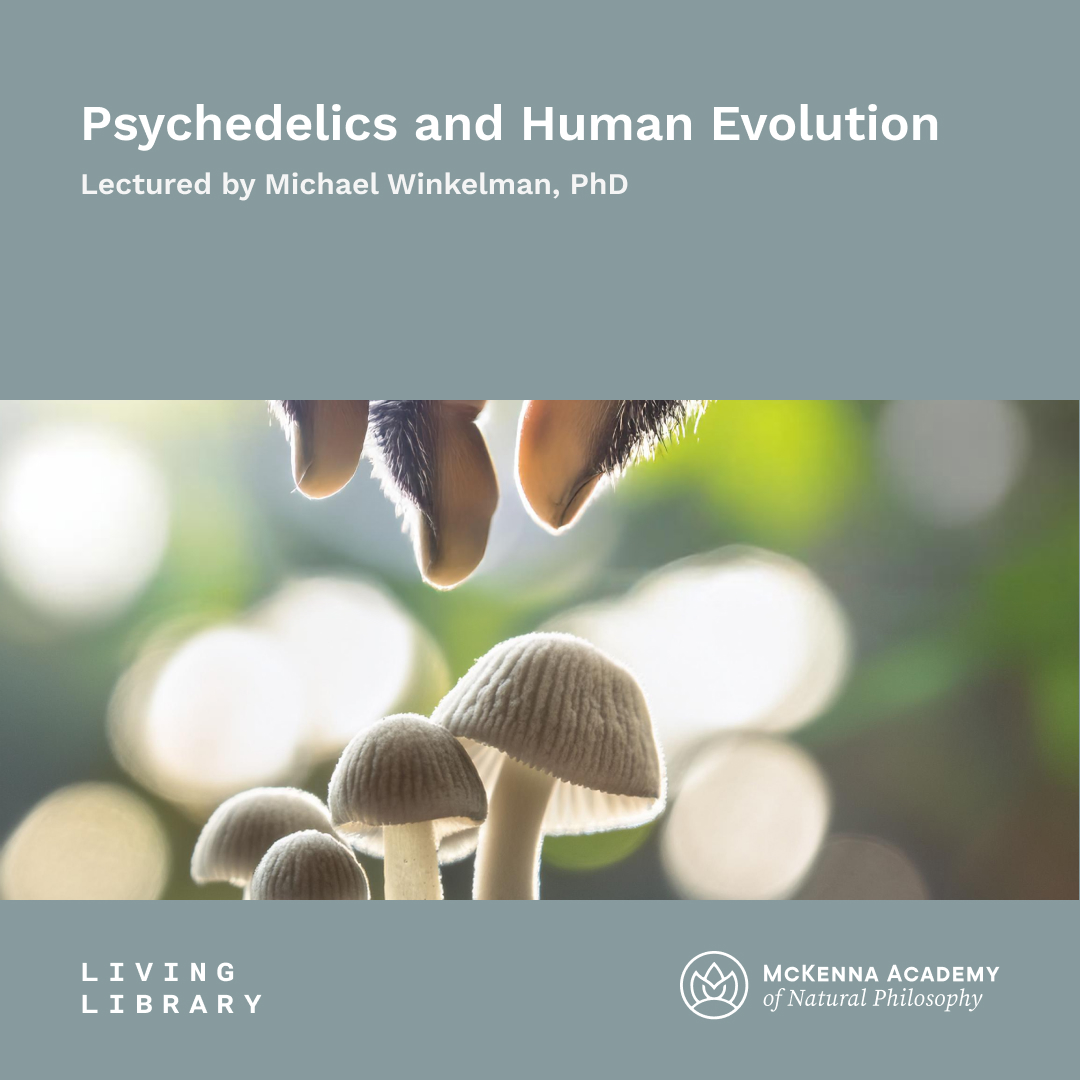
This Ethnobotany online course explores the compelling hypothesis that psychedelic substances, especially psilocybin mushrooms, played a significant role in human evolution and the development of consciousness. Moving beyond the controversial “Stoned Ape” theory, the course examines a multi-faceted array of evidence, from primate behavior and archaeological findings to cutting-edge neuroscience and clinical research, to build a case for the profound impact of psychedelics on our species.
We’ll investigate how psilocybin’s effects on the brain, particularly its influence on serotonin and dopamine systems, may have facilitated the unique cognitive leap that distinguishes humans from other primates. This includes exploring its potential to enhance visual processing, foster cognitive flexibility, and promote the emergence of novel mental representations. Furthermore, the course will delve into the social and cultural implications of psilocybin use, examining its potential role in fostering empathy, promoting prosocial behaviors, and driving the evolution of ritualistic practices and shamanism.
Finally, we’ll consider the contemporary resurgence of psychedelic research and its implications for treating mental health conditions, fostering personal growth, and navigating the complexities of the modern world, ultimately reflecting on the potential for psychedelics to contribute to a more conscious and interconnected future.
What you’ll learn:
- The Intertwined History of Humans and Psychedelics
Explore the evidence for ancient psilocybin use, tracing its potential influence on human evolution from primate ancestors to the development of early hominid societies. - The Neuroscience of Psychedelic Experiences
Understand the neurobiological mechanisms of psilocybin, its effects on key neurotransmitter systems like serotonin and dopamine, and how these changes relate to altered states of consciousness, enhanced creativity, and social bonding. - The Evolution of Shamanism and Spiritual Practices
Examine the potential role of psilocybin in the development of shamanistic traditions, ritualistic behaviors, and the emergence of religious beliefs across diverse cultures. - Adapting to the Cognitive Niche
Discover how psilocybin may have enhanced cognitive flexibility, visual processing, and social intelligence, contributing to human success in the cognitive niche and the development of shared mental models - The “Dopaminergic Personality” and Social Evolution
Explore the concept of the dopaminergic personality, its connection to shamanism, and how psilocybin’s influence on dopamine may have shaped human social behavior, cooperation, and group dynamics. - The Future of Psychedelics
Analyze the contemporary resurgence of psychedelic research, including its therapeutic potential for mental health conditions, and consider the ethical and societal implications of integrating these powerful substances into modern society.
Who is this online course for?
This online course on psychedelics and human evolution is designed for anyone curious about the potential role of these substances in shaping our species, our consciousness, and our culture. You’ll find this course valuable if you are:
- Mental Health Professionals
Psychiatrists, psychologists, therapists, and other mental health practitioners interested in the therapeutic potential of psychedelics and their impact on the human mind. - Students
Undergraduate and graduate students in anthropology, archaeology, psychology, neuroscience, religious studies, or related fields seeking a deeper understanding of human origins, consciousness, and the impact of psychedelics on culture. - Researchers
Scientists and researchers investigating the effects of psychedelics on the brain, behavior, and culture, including those working in fields like neurotheology, evolutionary psychology, and ethnobotany. - Individuals Exploring Consciousness
Anyone with a personal interest in consciousness, spirituality, altered states, and the potential role of psychedelics in personal growth and self-discovery. - Those Interested in Human Origins
Individuals fascinated by human evolution, the origins of language, art, and religion, and the factors that contributed to our unique cognitive and social development.. - Conservationists and Environmentalists
Individuals interested in biodiversity, conservation, and the sustainable use of plant resources. - Anyone Curious About Psychedelics
Anyone with a general interest in learning more about psychedelics, their history, their effects, and their potential impact on the future of humanity. No prior knowledge of neuroscience or anthropology is required.
This course will challenge your assumptions about the history of human consciousness and invite you to critically analyze the complex relationship between psychedelics, culture, and our ongoing journey of adaptation.