In Service of Ayahuasca
A Medical Doctor’s Journey Into an Ancient Healing Tradition
Foreword by Don José Campos
Prologue: The White Owl
Acknowledgments
Introduction
PART ONE: Life as a Medical Doctor
- Early Medical Training
- Traditional Medical Practice
PART TWO: Vision Turned Inward
- First Ceremonies
- Keeper of the Light
- A Calling?
- Early Shamanic Training
- Don José Campos and Don Lucho
- Two Dreams and a Solo Journey
- Death, Birth, and Rebirthing
- One of Many
- The Water Healer and My Lofty Position
- Competition and Dipping the Cloth
- The Freedom to Choose
- Dark Projections
- From Participant to Facilitator
PART THREE: The Elements of Ceremony
- Preparations
- Opening the Ceremony
- Ikaros
- The Heart of the Ceremony
PART FOUR: The Wisdom of Participants
- The Bridge: Cedar and Vida
- A Sweet Addiction: Lucy
- Widening and Narrowing: Shunyru
- Homage to My Teacher: Zoe
- The Blind Truth: Tasha Ree
- A Koan—and My Best Friend: Travis
- We Are One: Vero
- The Number Five, the Bear, and a Crack of Thunder: Thomas
- Listening to the Pain: August
- The Long View: Eytan
- Back from the Abyss: Bon
PART FIVE: Final Field Notes
- Surprises
- Intuition, or the Voice of the “Other”
- The Elusive, Present Moment
- Who Is the Real Healer Here?
- The Ultimate Healer
- The Teacher
- The Costs of This Work
- When One Door Closes . . .
Appendix A: Don José’s Incarceration
Appendix B: Helpful Organizations
Glossary
References and Further Reading
About the Author
Foreword
by
Don José Campos, Peruvian Vegetalista
(translated by Ali Iwaskow)
The term vegetalista was coined by the healers of the Amazon rainforest to describe themselves. In the mountains you won’t hear the term used, nor on the coast; it is only used in the Amazon. White Owl’s book is based around the Amazonian culture, so he uses vegetalista to describe healers, such as he has become, who use plant medicine in their work.
In fact, a better term might be arbolista, meaning one who knows how to use the roots and bark of trees in healing as well as how to use other plants of all sizes, including grasses. As is done in botany, we organize plant life into three categories: large or tall, medium, and small or short. An example of smaller plant life is los piri piri, a type of grass. An example of medium-sized plant life is the shrub la chacruna. And, in the category of large or tall, are trees such as el mango, el chuchuwasi, and el shihuahuaco.
The question is, How did White Owl, a North American medical doctor, become interested in the Amazonian world of plants—the world of an ayahuasquero, or “one who works with Ayahuasca”? Well, as he studied science and practiced medicine, his interest in healing led him to be curious about not only the Amazonian curanderos, or “healers,” but also about the effects that the plants they use have on us. There is so much a vegetalista must learn about these plants! I’m talking about the sanango plants as well as roots and how to use different tree barks. Trees such as el shihuahuaco and el chuchuwasi also require much learning, as do vines such as the renaquilla and ayahuasca.
So, as White Owl became interested in this knowledge of plant medicine, more profoundly, he began ingesting and working with these plants himself. He began to form relationships with these plant medicines. He began to realize that there is another world of medicine, one that isn’t taught in the university. And what is so beautiful about this type of medicine is that it connects us to nature and to our own beings. La ayahuasca and la chacruna genuinely help us; they help us to explore both ourselves and the natural world around us.
All this knowledge is so valuable to you as a doctor, White Owl, and I imagine you are so grateful for it. I myself am also grateful for you. Thank you for coming to the Amazon to share the knowledge that you have as a doctor and for the dedication it has taken for you to acquire the wisdom you have from studying these plant medicines.
The life of a vegetalista requires a lot of sacrifice. It usually requires leaving one’s family for long periods of time and often requires working in solitude. Many other sacrifices are also necessary to walk this path. So, to the young people thinking that they want to do this work, I say, “Think long and hard.” I speak from experience. Maybe in my youth I was like these young people, believing that the life of a healer would be easier than it is. But now, as an older man, I know that this path is one of sacrifice. It takes a long, long time to walk, so you must have patience and stay calm and focused. As the years pass, you will begin to be shaped by the work—just as White Owl has been. You will begin to understand that this path is one to which you must dedicate your life. It isn’t as simple as going to a university, getting a degree, graduating, and being ready to take on a job. No, the work of a vegetalista is different: you don’t learn in classrooms; you learn from life itself, and often in the process suffer from hard hits and sometimes pain.
Nonetheless, the path of a vegetalista is also a beautiful one. It is through all the hard times that one learns and becomes grateful for this wisdom and knowledge. There is dignity in being able to help people heal. So, White Owl, as you have dedicated yourself to this dignified work, I wish you much luck and a strong will for all your days as you move ahead.
Prologue
The White Owl
Early in my journey to become a vegetalista—a healer who works with plants in the Peruvian shamanic tradition—I was swimming upstream in the deep and mysterious waters of the Amazon jungle. It was 2005, and I was on my first dieta in Peru led by the shaman Don José Campos. Dieta, in Amazonian herbalist traditions, means not just diet but a kind of spiritual quest. Participants embark on a silent retreat in the jungle that involves isolation from others, a strict, simple diet, and the ingestion of a tea made from a variety of plants. Called “teacher plants,” they are known for their ability both to bring us closer to the knowledge of the spirit world and to remedy certain physical diseases.
At the time, I was drinking a medicinal tea made from the bark of the Bobinsana, a beautiful, water-loving tree that grows along the river banks. I had been meandering along the small river, the Rio Rinquia, that runs through Don José’s camp, when suddenly I felt very drawn to being in the water myself. Just past the last tambo (shelter), the river made a sharp turn to the left and got quite deep. I had not yet explored beyond that point and felt a little scared as well as drawn to go farther.
As I swam upriver, I noticed what appeared to be two eyes looking at me just above the surface of the water. It seemed to be a caiman, a small crocodilian weighing up to a hundred pounds. It started moving toward me, and I swung my feet around to kick it away. I wished I had a large knife with me like the one Tarzan had in the movies: properly armed, and with much thrashing about in the churning water, I’d fight the aggressive beast until one of us were dead. To relate how I killed the caiman almost with my bare hands would have made a great opening to this book. But the truth is that, as the thing got closer, I could see it was just a floating stick with two bumps on it that looked like eyes. I laughed at myself for getting so frightened over a stick! And the real creature I was soon to meet seemed a much more benevolent omen.
The Rio Rinquia at this point becomes uncharacteristically straight for a quarter mile or so, and, with the overhanging trees, the space above the water is like a tunnel. Birds and butterflies, such as kingfishers and the giant blue morpho, use it as their highway to travel up and down the river. On the day I was there, far ahead a bird attracted my attention by seeming abruptly and rapidly to make a sharp, ninety-degree turn to the left. What made it strange is that the riparian zone along the river is so dense that flying right into the jungle at a rapid speed would be impossible.
I swam to the point where I had seen the bird veer left and found a very small stream that entered the Rio Rinquia there. Setting off to explore it, I could mostly wade through the shallow pools and walk along the rocky paths. Two or three hundred yards upstream I came upon a grotto-like space where the stream had cut a channel through the hard rock of the cliff, creating a beautiful, deep pool with twenty- to thirty-foot, fern-covered, rock walls along the upstream side.
Suddenly I sensed that I was in a sacred space. Feeling I should be naked, I removed my swimming trunks. Standing there, soaking in the beauty and sanctity of the place, I noticed a large, white owl staring at me from a tall tree beside the pool. For what seemed like five minutes we locked eyes. I felt I was receiving something from the owl—a transmission of sorts. I can’t say exactly what I was receiving, though, as it did not seem to have content that my mind could grasp; nor were there words. I left the sacred area knowing only that something very special and significant had happened there . . . an encounter with the wild and the mysterious.
A day or two later I returned. As I was swimming upstream in the main river before the side stream, I telepathically asked the owl to send me a signal if I were welcome to visit again. Just then a white feather floated downstream to me, which I took as an affirmative sign. Wading through the stream’s shallow pools, I spied a large, brightly banded snake in the water, later identified by the jungle staff as a very poisonous Naca Naca, or coral snake. When I arrived at the grotto, I looked for the owl and was disappointed that he wasn’t in the tree where I had last seen him. Then I could “feel” him looking at me from somewhere to my left. The sensation is hard to explain, but it felt like a subtle knocking at my left temple. Sure enough, when I looked to my left I found my friend in another tree. We had another few minutes of communicating with each other visually and in other ways.
Although I have returned to the Sacred Pool many times, I have never seen the white owl again. Often, when I am ready to make a commitment with the plant spirits to go deeper into shamanic work, I have entered the pool’s deep and cool waters and swum into the small waterfall that creates it. With the water cascading over me, I have blessed and thanked the water and spoken of my intentions.
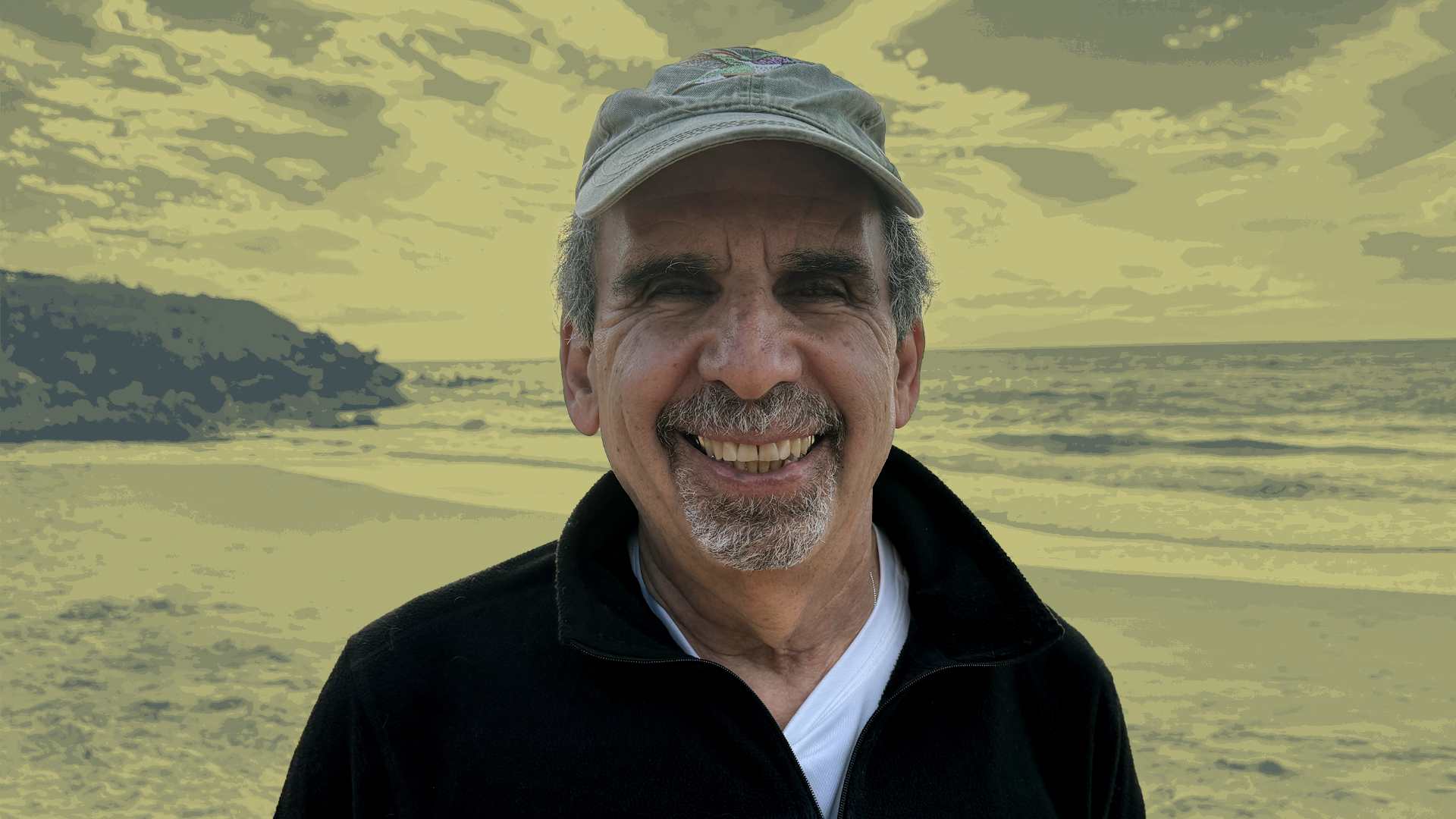
I tell this story for several reasons. For one thing, it explains why I have often used White Owl as my pen name. The illegal status of doing healing work with plant medicine in the United States necessitates such caution.
For another thing, the story represents my intention to transmit, to the best of my ability, something that is beyond the power of words—something that cannot be grasped with rational thought, that comes from the unfathomable, mysterious realm of Spirit. As I write, I ask the spirits of the medicinal plants to guide me and to come through between and around the written words.
I also tell the story because it highlights my emphasis in this book on a much deeper connection with the nonhuman, living world around us, not only with the Earth herself but also with the plants, animals, and invisible beings that inhabit this plane of existence alongside us. I am talking about a connection with all sentient beings—beings who, as David Abram states in The Spell of the Sensuous, long for recognition from and relationship with the human realm.(1)
Finally, let us not forget the poisonous snake that guarded the entrance to the Sacred Pool. To me, the message is “proceed with caution” and “keep your eyes open.” This realm of plant medicine is not to be entered into lightly. One needs to be prepared for some difficult, confusing, and sometimes frightening experiences. One will be tested, challenged, and maybe initiated. Even in simply reading this book, you may come to recognize parts of yourself that are hard to accept. What is your experience as you read these words of caution? Do you feel frightened? Do you feel excited?
1 David Abram, The Spell of the Sensuous (New York, NY: Vintage, 1997).
RELATED CONTENT
Brainforest Café
SEASON 1 EPISODE 48 | 01:06:15 | NOVEMBER 17, 2025
A conversation with Nissan
From Conventional Medicine to Plant Dietas and Spiritual Growth