Appearances, now or henceforth, indicate what you are
Walt Whitman, “Crossing Brooklyn Ferry”
You necessary film, continue to envelop the soul,
About my body for me, and your body for you . . . .
We fathom you not, we love you . . . .
A few years ago I got a call from a young man, a former grad student from my meditation classes at the University of Minnesota and now a licensed therapist. His voice cheery, he asked if I’d tried the LSD yet. My chest tightened! What in the world could he be thinking? Never, never for over sixty years, had I ever by phone, letter, or later by email or text, referred to such matters—except in cautious circumlocutions. I cut the call short, suggesting coffee. Today, although I’d still be quite edgy, I’d answer the question. Doors have opened for research and exploration of psychedelics I never dreamt could happen in my lifetime.
My first marijuana experience was in 1962 when I was 21. Peyote, mushroom, and LSD followed. But by 1968 most psychedelics were as illegal as heroin. A best friend spent five years behind bars for LSD sales; another two years of hard time; others were jailed for marijuana sales; we all lived in fear of arrest. Medicines that had sprung me from bouts of serious depression, heavy drinking, and abuse of heroin and methamphetamine were suddenly illegal. Medicines that had catalyzed my life-long practice of Zen meditation could put me in jail. I risked losing job, income, career, assets, home, freedom, and most terrifying, my children. Slowly now, very slowly, I’ve become accustomed to a Brave New World of more open psychedelic discussion and exploration. But my visceral fear of “the bust” lingers, at times verging on paranoia. It darkens my own psychedelic experiences. It’s a price I pay.
As a young man, a Unitarian, I’d rejected religion or spirituality. I’d absorbed a blackturtle- neck Beatnik existentialism that saw the universe as ugly, random, and absurd, what the Jungian James Hillman has described as a modern/post-modern “repression of beauty.” But in one transfiguring year that included a profoundly moving mushroom Velada with Maria Sabina in Huatla de Jiminez, meditation with Shunryu Suzuki Roshi at Sokoji Temple in San Francisco, and Timothy Leary’s recommended weekly LSD sessions, this “repression” evaporated. A rose was, beyond debate, beautiful; the earth, sky, and ocean most glorious; my human body vibrant; my friends, girlfriend, and I brimming with possibility. I even buckled down and squeezed in long-neglected work to complete my Masters in English at Berkeley.
Despite the dangers after 1968, several close friends and I—Zen psychonauts—wished to continue exploring. We knew what the medicines had done for us; we knew the synergies between psychedelics and meditation. By the seventies, eager to grow my own mushrooms, to have confidence in their purity and be free from underground dealers and risky exposure, several of us attended the Second International Hallucinogenic Mushroom Conference held in 1977 in Port Worden, Washington. I learned of Dennis and Terence McKenna’s just published Magic Mushroom Grower’s Guide (the pseudonymous authors were O.T. Oss & O.N. Oeric). Soon, using simple kitchenware (including my daughter’s empty baby food jars), I had a crop of Psilocybe cubensis. By a wonderful coincidence, or synchronicity, or divine alignment, Dennis and I became colleagues years later. He told me I’d cultivated a clone of the very mushroom he and Terence had brought back from their experiment at La Chorrera in the Amazon Basin.
At last, now, these many decades later, we can openly explore psychedelic medicines— medicines that can stun and terrify, can exalt and bless, and that often do it all. They may catalyze Kierkegaard’s “fear and trembling” before the God, before the Infinite, the Mysterium Tremendum. They may mimic madness, with some early researchers describing them as “psychotomimetic.” Or they may engender, as Aldous Huxley and Huston Smith insisted in the 1960s, profoundly rewarding religio-mystical states of awareness. Experimentation over the last seventy years, both scientific and lay, confirms that, when taken in a good way, the medicines can catalyze awe, joy, connectedness, and an unutterable sense of peace. Some of the earliest research with LSD-25, at the time still legal, induced remarkable remissions of severe alcoholism. Even Bill Wilson, the founder of Alcoholics Anonymous, tried LSD, writing, “I am certain that the LSD experience has helped me very much.” He realized it could catalyze “spiritual” experience, filling the void too often filled by addiction, but was advised against considering the use of a “drug” as any part of the AA model.
But what can objective science do with molecules that trigger a subjective “spiritual awakening”? Roland Griffiths’ groundbreaking work with psilocybin at John Hopkins over the last decade demonstrates that patients who have such “mystical-type” experience are the most likely to gain relief from psychological conditions such as depression, anxiety, and addiction. For lack of better terms, I’ll use the words “mystical,” “mystery,” and “spiritual” when entering this territory—focusing particularly on the radical alterations in the external visual field that help trigger the “spiritual.” I won’t attempt to explore here the vast array of eyes-closed “visions”— the upwelling of powerful emotional material, manifestations of Jungian Archetypes, contact with otherworldly beings, travels to the cosmic, cellular, molecular, or atomic realms—vast reservoirs of experience that reveal the infinite potentials of the human brain.
(Here I must express my deepest gratitude to Roland and my grief at his untimely passing. We have lost a man who broke new ground, fusing his contemplative practice with rigorous scientific exploration. With persistence and quiet determination, he shattered fifty years of crippling legal and institutional barriers—and the fear they engendered.)
Any alterations to the external field of vision are shocking. We are, above all, visual animals—omnivore predators with binocular vision. Dogs explore the world chiefly with the nose; we explore chiefly with the eyes. From birth on, the brain learns, over years of development, to apprehend a three-dimensional world of shape, color, depth, width, and motion. Indeed, when persons blind at birth suddenly gain sight through cataract or other surgeries, they may be confused and even terrified by a chaos of incomprehensible forms, colors, and movements—some even refusing to use their new eyes. However, if normally sighted, we come to trust implicitly our constructed visual world. We accept it as “real,” as the world “out there”—yet it’s a “percept”: a “mental representation of something . . . perceived by the senses rather than the physical stimulus that generates it” (Oxford Dictionary of Psychology). Any transformation of this known and trusted world, with eyes open or closed, can be terrifying, alerting the body and brain to possible illness, disorder, even madness.
If I dilate the mind with as little as 1/8 of 1/1000 of a gram of the LSD-25 molecule, within thirty to ninety minutes vast realms beyond my ordinary experience open. Powerful, often painful energies sweep through my body. I tremble. Sounds may magnify. I may feel the “self” dissolving or lost in vastness. Visions filled with released unconscious material, pleasant and unpleasant, sweep behind my closed eyes. With open eyes, I find my accustomed visual field radically transformed. All this triggers an acute stress response, my brain and body overwhelmed by inexplicable non-ordinary experiences. My usual small self, my ego, my default mode network is not in Kansas anymore.
The greatest psychedelic terror I ever experienced occurred, ironically, at a drug-free daylong workshop led by Timothy Leary at Chicago’s famous but fading Edgewater Beach Hotel in the spring of 1966. Fred, a faithful psychonautical companion, and I rode the train down from Minneapolis the day before and stayed with a friend. Determined to display our mastery to the sage, I’d written him that we’d “dilate mind” for the event. We received no cautionary reply, so upon arising we skipped breakfast and took our weekly dose. Fred took the usual 250 micrograms. Impulsively, I took 500. Could there be any more auspicious moment to break through into the Heart Sutra’s Unsurpassed Complete Perfect Enlightenment? But trying to shave, fingers, razor and cheek wouldn’t align. As our friend drove us to the hotel, I begged the experience to stop. In the lobby, Fred navigated me through a confused babble of voices and faces to the elevators. The workshop began. Eyeing Fred and me, Leary asked, “Has anyone in the room had LSD before?
“I have,” I burst out. “This morning. And way too much. I can’t handle it!”
“I did some too,” Fred chimed in.
Leaving his thirty-odd participants to helpers, who occupied them with Shivasana as a strobe light chattered, Leary waved us into an anteroom. After a few questions, Leary sat me before him and held my gaze. “What you took was just the right amount! Now, let’s go back.”
Joining the others, now sitting on meditation cushions, the visual world around me turned liquid. Colors in the Oriental rug beneath me rose up in waves and broke like surf over my knees. Vast and intensely painful energies coursed through my body. My bones were burning rods, my joints breaking. Engulfed in panic, sure I’d gone mad, I envisioned a future life institutionalized. If only I could escape this room! But that would be cowardice. I just had to see this through—and where could I escape to anyway?
Fred and I stayed and that evening rode the train back to Minneapolis.
This reckoning also was Albert Hoffman’s in 1943 after ingesting 250 micrograms of his own creation—that he, the diligent and careful Swiss chemist had gone mad, would never recover, had disgraced himself. Worst of all, his wife and children had lost him and must now fend for themselves. However, when graced to move beyond terror into acceptance of these astonishing new realms, into gratitude, as Hoffman did by evening (and I say “graced” because I have no tricks or techniques by which I can guarantee this transformation), I find myself in complete harmony with a cosmic network that is stunningly beautiful and right, that works itself out in ways quite beyond me—and that all is very well. Such experiences moved me, some of my friends, and many others in the heyday of the 60s to dramatically change our lives for the better.
In an early exploration, undertaken in Oakland in the autumn of 1964, three of us sat on round meditation cushions, faced a wall, dropped acid, and began to meditate. We were eager to try the Leary approach, a fusion of Buddhist and psychedelic Enlightenment. But soon we began seeing “snakes”—forms coiling and uncoiling in endless, roiling motion—and our imperturbable, silent sitting evaporated. Minutes later, looking into our palms, amazed, we saw into the flesh and witnessed blood flowing inside. Staring at a table top, the flat surface became three dimensional. Looking into and inside the wood we again saw flowing, spiraling movements. Admiring a red rose, we witnessed the petals in constant, gentle waving motion. We found ourselves in the kitchen, and I turned the faucet full force into the sink and all four stove burners up high. Astounded, we beheld, moment by flowing, eternal moment, the ancient, twin miracles of fire and water coming into being. What had a few hours earlier been an ordinary out-of-date, down-at-heels kitchen with its peeling paint, stained sink, and battered stove suddenly revealed itself as miracle. It existed, it was our hearth, and we were held in a warm, welcoming, and astonishingly alive cocoon.
What had happened? What were we seeing? For over fifty years I’ve wondered at the remarkable perturbations of the visual field catalyzed by psychedelics. I’ve come to believe they bring into conscious awareness some of the normally hidden—and orderly— processes of vision in ongoing operation. We witness the brain-loom weaving together its percept of the world out there, a world created as light strikes the retinas, stimulates the optic nerves, and conveys information to the visual cortex and other parts of the brain.
In psychedelic experience, then, we are not having hallucinations or experiencing chaotic disruptions to brain function. Rather, we are suddenly allowed to witness the brain in the very act of constructing its reflection of the world—in the performance of a miracle. Through some incomprehensible alchemy involving billions of neurons firing and synaptic interconnections stimulated, I witness an oak tree in the front yard. Its dark green leaves tremble in the breeze. A brown acorn falls. Dappled sunshine falls into the grass below the gnarled trunk, against which I decide to lean. Simultaneously, each of the other four senses is constructing its own reality— with sound, smell, taste, and touch all fusing to create my ongoing perception of the world. And what is this “I” that “decides” to lean? That seems to have the free will to lean? Surely it is the arising of yet another vast network of neuronal connections. And is there something beyond even that? Can we plumb that mystery?
Consider the metaphor of a mirror and its reflections. If in an ordinary state of mind I observe the reflection of a mountain in an unruffled alpine lake, the reflection can be indistinguishable from the mountain itself—until the reflective surface is perturbed by wind, a fish jumping, or stone thrown. Then the mountain ripples as the reflective surface ripples. Just so, I suspect that during the psychedelic experience I see the mind rippling—the activity of the visual cortex itself as it engages in the normally hidden project of mirroring the world, of transforming images cast by light upon the retina into visual experience that the ordinary mind experiences and interprets as outside the physical self.
As I became more accustomed to the extraordinary states induced by high dosages, I observed in the visual field systematic patterns of interlocking blood vessels—indeed beds of capillaries interwoven in a perfectly articulated three-dimensional network and infused with a pristine, transparent flowing fluid. Held by and within this field was the world out there— perhaps a living room, or a street, or a sidewalk—shapes, surfaces, and colors embedded in three-dimensional space—all composing themselves, decomposing, and recomposing. Or when taking psychedelics in wilderness from a high crag, looking out over a mountain valley, I found the empty space above the miles of valley floor below was not empty. It was filled with the same network of translucent capillaries suffused with flowing energy that I’d seen in the surface of my palm or on a tabletop.
At lower dosages these effects were diminished, but still persisted as solid objects became fluid, pulsating and shimmering, giving a sense that whatever I beheld was breathing, that I was part and parcel of a living universe. I came to expect these forms of psychedelic seeing, just as in normal vision I expect the color red to be red. Those early “hallucinations” of snakes or of seeing “into” my hand were misperceptions of the brain’s own processes. I was witnessing trillions of neuronal connections weaving together, moment by moment, a visual image of my hand. I was a living mirror, and the world I experienced out there a reflection constructed, miraculously, from my own flesh and blood.
The “mountain” slips through my iris on beams of light, lies upside down on both retinas, travels via the optic nerves, and suddenly, right now, in three dimensions I see a mountain. My first naive interpretation of this “seeing” was that it must be the rod and cone structure of the retinas, embedded in blood-suffused capillary beds, responding to light waves (or photons?) and forming two microscopic, two-dimensional cellular representations of the world out there—with this data then sent to the visual cortex, where it could in turn become a microscopic threedimensional cellular representation—and then, somehow, apprehended. But nothing in my layman’s reading on vision supported such speculation. Was I then seeing something that arose throughout the whole brain itself? Or? I have no answer, but it seems, in any case, that in LSD experience I directly witness processes, usually hidden, by which my brain creates the subjective experience of seeing. However, from infancy on, we have necessarily learned to experience this reflection created by the brain as truly outside the body—for without that presumption the baby’s hand might not learn to reach the mother’s breast or the hunter’s arrow pierce the heart of the buffalo.
In ordinary activity it is impossible to hold awareness that the world we experience is a percept, a reflection within the mind itself, a product of blood and brain. As I write these words, I don’t think of the computer screen before me or my hands typing or my peripheral vision of the room as “mind stuff.” Even when I directly witness the world behaving in ways that, upon consideration, I know impossible, I nevertheless experience it as perfectly ordinary. Consider the remarkable willingness of the mind to accept as normal the visual experience of driving. At 75 miles-per-hour I witness the road pouring beneath me like a black river, while distant barns stand still, floating on an undulating ocean of earth, and fields close by grow larger and larger until they slip by and out of sight. The earth itself changes shape, shrinking, expanding, writhing, fluid—even though the farmer I see standing, carried past me on the flowing river of his field, feels his boots planted firmly on solid earth and the trees in his windbreak the same size today as they were yesterday.
As a child, fascinated by this phenomenon on vacations in the family Studebaker, I stared, transfixed, as telephone poles grew from small to large and the wires suspended between rose and fell like waves. I wondered how the entire solid, surrounding earth could be in constant flowing motion, and, at times when rounding a curve, in seeming revolution like an immense 33 1/3 vinyl record. How could the sun and a few clouds simply trail along with our moving car, while everything closer was drifting past? As we overtook the car ahead of us, how could it grow larger and larger, inflating like a balloon? I remember asking my mother, receiving an answer I’ve since forgotten, and then simply accepting this world as the world when driving. But wonder remained, and on family vacations I sank deeply into landscapes as they floated by.
This experience, however, is an unanticipated consequence of the modern industrial world. Only with the arrival of rail in the mid-1800’s could humans, for the first time, sit quietly with bodies at apparent rest and clearly observe the visual effects of speed. There was surprise, even alarm. Queen Victoria at age twenty-three became the first British monarch to venture by train, going with Prince Albert and the children every summer to Balmoral Castle in Scotland. She wrote that she was “quite charmed by this new way of travelling” (a day or a night on the train replaced several days jolting in a manure-bespattered horse-drawn coach over rutted, muddy roads), but she feared the vertiginous top speed of 43 miles-per-hour was dangerous to the health. She refused to allow her royal coach to exceed 30 miles-per-hour, insisting that a special signal be affixed to its roof so she could, if alarmed, command the engineer to slow down.
What might have distressed her at speeds beyond 30? I find no record, but suspect she was discomfited to realize, as did Ralph Waldo Emerson on his first train ride, that the earth had suddenly become fluid, insubstantial, a chimera, not solid and reliable: “Matter is phenomenal…men and trees and barns whiz by you as fast as the leaves of a dictionary … Trees, fields, hills, hitherto esteemed symbols of stability, do absolutely dance by you.” Emerson witnessed what he, in his fascination with Hinduism, knew as Maya—that the world arising before us moment by moment is a magic show, a rainbow, an illusion—or, in biological terms, the product of infinitely complex, intricate, and perhaps ultimately incomprehensible neuronal activity. But a century and a half later, as vehicles move us at high speed from infancy on, we forget that, before steam, no human had ever sat at ease in relative stillness and witnessed the landscape flowing like sweet syrup. For us it is ordinary, and it would become so for Emerson. Nine years later, on another train trip, wonder had faded. He found the landscape merely “dreamlike” and returned to reading a French novel.
Now, after long involvement with the medicines and their transformations of the visual field, I see plain evidence of the radical Oneness insisted upon by mystical traditions East and West—that the road I am perceiving at 75 miles-per-hour is me. What I experience is not the object that most certainly exists out there. It is my own visual cortex reflecting the road, bringing into awareness an experience of flowing blackness. The road itself, the hardened tar below me, is perfectly real, but it’s not flowing, nor sinuous, nor changing its shape. If I stopped and stepped outside the car with a tape measure, I’d find the road solid and reliably about 25 feet across. But in my mind it’s fluid—and, therefore, it must be my mind that’s fluid. Light hits the retinas and a road appears. Billions of neurons fire and relax, the road moves, writhes, alters, does all the things that discomfited the Queen and shocked Emerson. I’m viewing my own mind in motion. The road is me! I am That. In Sanskrit: Om So Hum. And the tar stimulating my perceptions itself exists, solid, an enigmatic quantum reality outside my body and in rapid motion past me.
My employment of this verbiage, these word nets, however, necessarily leaves me in dualism. But the Buddha—and perhaps Einstein and quantum mechanics also—insist on Oneness. While it’s true that the road itself is not me, that it exists “out there” and my brainmind reflects its sinuous black flow—the Buddha’s insight goes deeper. The road and I are separate, yet together are woven moment by moment within One infinite quantum loom. The road and I are waves on one Ocean.
When I’m meditating in my living room, witnessing the American flag my neighbor flies across the street, I remember a famous Zen koan. Two monks argue over a waving temple flag. What, they demand of each other, is the essence of this color, shape, and movement called “flag”? One insists: “The flag is moving;” the other counters: “The wind is moving.” Are they asking if the force of the wind is causal? Or the fluidity and resistance of the cloth? Or both together? Or is this a Zen debate over free will, over how fully a woman or man is controlled by the winds of karma? Caught in a web of intellectual dualities, the monks puzzle themselves, attempting to capture “flag” with logic, with intellect, within word nets. Upon hearing this Hui-Neng, the Tang Dynasty Sixth Zen patriarch, remarks (perhaps impatiently, perhaps with a chuckle), “Not the wind, not the flag; mind is moving.” Even as the monks dispute, the moving flag appears to each, its flapping colored fabric being woven within each of their minds—and stimulated by an object outside their minds reflecting light. Mu-mon, recounting this in the thirteenth century, observes: “If you understand this intimately, you will see the two monks there trying to buy iron and gaining gold.” The monks “see” the flag as an object, as outside themselves. Hui-Neng experiences it as subjective, mind-created, as a mystery beyond words—a knowing that Mu-mon recognizes as gold.
In the Zen tradition, the Buddha’s first acknowledgment of another’s enlightenment occurs through vision. He holds up and twirls a flower before his listeners. The disciple Maha- Kashapa smiles. The Buddha responds, “the true teaching . . . is not expressed by words, but especially transmitted beyond teaching. This teaching I have given to Maha-Kashapa.” Today the student might ask the Master, “What is enlightenment?” She might reply, “Open your eyes. Wide. Right now! Right here!” Then, in the way of Tang Dynasty Zen, she might pound the table, or offer a blow upside the head, or pour cups of tea.
Aldous Huxley echoed these understandings. In describing his 1953 mescaline experience (an experience that inspired countless seekers in the 60s to hunt down sources for psychedelics), he tells how visual changes moved to the mystical—to a transfiguration of the seen world. Observing a simple nosegay of flowers,
I was seeing what Adam had seen on the morning of his creation—the miracle, moment by moment, of naked existence . . . . a bunch of flowers shining with their own inner light and all but quivering under the pressure of the significance with which they were charged . . . a transience that was yet eternal life, a perpetual perishing that was at the same time pure Being, a bundle of minute, unique particulars in which, by some unspeakable and yet self-evident paradox, was to be seen the divine source of all existence
This “seeing” awakens Huxley to the meaning of another famous Zen koan. A monk asks:
“What is the Dharma-Body of the Buddha?” (. . . another way of saying Mind, Suchness, the Void, the Godhead.) . . . . the Master answers, “The hedge at the bottom of the garden.” . . . . It had been, when I read it, only a vaguely pregnant piece of nonsense. Now it was all as clear as day, as evident as Euclid. Of course the Dharma-Body of the Buddha was the hedge at the bottom of the garden. At the same time, and no less obviously, it was these flowers, it was anything that I – or rather the blessed Not-I, released for a moment from my throttling embrace – cared to look at.
The Zen Master points wryly to the ever-present miracle from which we are routinely separated by our insistent anxieties, confusions, distractions, and demands. Whatever we behold as it arises in our minds—a nosegay of flowers, a hedge, a flag, an oak tree, a mountain, a tarry road, a loving or angry friend, even a disheveled kitchen—is miracle. Their very existences outside of us are miracle. That we have a mind perceiving them right now in this flowing moment is miracle. Whatever we do—drink tea or love or explode in anger—is miracle. That you are reading these words at this particular moment is miracle. All this exists for us only because the brain—this mind-loom—this marvel of 100 billion neurons and exponentially vast interconnects—is weaving, always, the warp and woof of our experience. Within this miracle of creation (and indeed I find even the term “miracle” inadequate!) arises the sense of self that is joyful or sad, at peace or angry.
Huxley, who for years had studied and written about the mystical experience without ever having had one, who had grappled with terms like the “Beatific Vision, Sat Chit Ananda, Being- Awareness-Bliss,” tells us that “for the first time I understood, not on the verbal level, not by inchoate hints or at a distance, but precisely and completely what those prodigious syllables referred to.” Huston Smith, who had grown up in a missionary family in China and had devoted himself to studying (and practicing) the world’s religions, was stunned by his psilocybin experience in the Good Friday Experiment at Harvard in 1962. It led to “the most powerful cosmic homecoming I have ever experienced.”
In my own daily meditation practice (which I never augment with psychedelics, only cocoa or caffeine), I find that, as the mind begins quieting, as thoughts dissolve and attention moves from past or future into a standing wave of one-pointed absorption, perceptions of normally hidden visual processes may begin to emerge. I may notice fluidity in shapes and luminosity in colors. I may notice clear, flowing energies enfolding objects and filling the “vacant” space before me. I may observe the room in which I’m sitting as, yes indeed, my living room—but as also a wondrous, welcoming bubble of mind energy arising moment by moment— a miracle of pure awareness that I am never separated from except by, as Huxley says, my ego’s “throttling embrace.” Such awareness is muted compared to high-dose LSD experience, but in a long Zen retreat it deepens. All the senses are alive. I’m awake, gathered together, complete, and at peace. Gratitude follows. Nothing more is needed.
We do not, of course, have to rely on psychedelics to experience this hallmark of mystical experience—“the peace that passeth all understanding.” Meditation, among many other spiritual practices, if pursued assiduously, can help us step beyond our circumscribed small selves. For those who do explore psychedelics, there are now available seasoned medical professionals, indigenous medicine people, and elders. Nor do we have to investigate psychedelics with an eye to the “spiritual.” We can be just plain curious, open the door, and step through—although best with full awareness of the hazards, accompanied by a knowledgeable or at least responsible companion, and with wise attention to one’s mind set and the physical setting of the venture. Indeed, perhaps the best preparation for psychedelic experience is what I call a “foundational” spiritual practice, one integrated into daily life and settled into the blood, bones, and marrow. Such grounding may not save me from fear and suffering, but it buoys, it holds, and it offers courage. Further, for those who have already an ongoing spiritual practice, the psychedelic experience can be a touchstone, a renewal, a reaffirmation that there is good reason to walk the long, arduous, and often dusty path of a regular discipline. It seems fitting that the raw alterations of the visual field in psychedelic experience should trigger what we can call mystical experience. The world is seen anew. Scales fall from the eyes. Our sense of ordinary self, our ego, our default mode network is upended—and whether our experience is blissful or terrorizing, Heaven or Hell—we are set face to face with what Rumi calls “The Great Mystery That Is.” I know many who turned away and continued with lives of ordinary disappointment or satisfaction. I know many who were sparked to reassess and rebuild.
While at age 83 I’m no longer eager to visit the high-dose realms (not improperly called “heroic”) offered by these medicines, I continue to explore. When stars align, I still experience myself and the mountain as one, as a single standing wave in the river of time—an endlessly renewed miracle. And I’m grateful that we are, despite a misguided and immensely destructive half-century of delay, entering a new age. At last, with far less risk and fear, others can walk these paths.
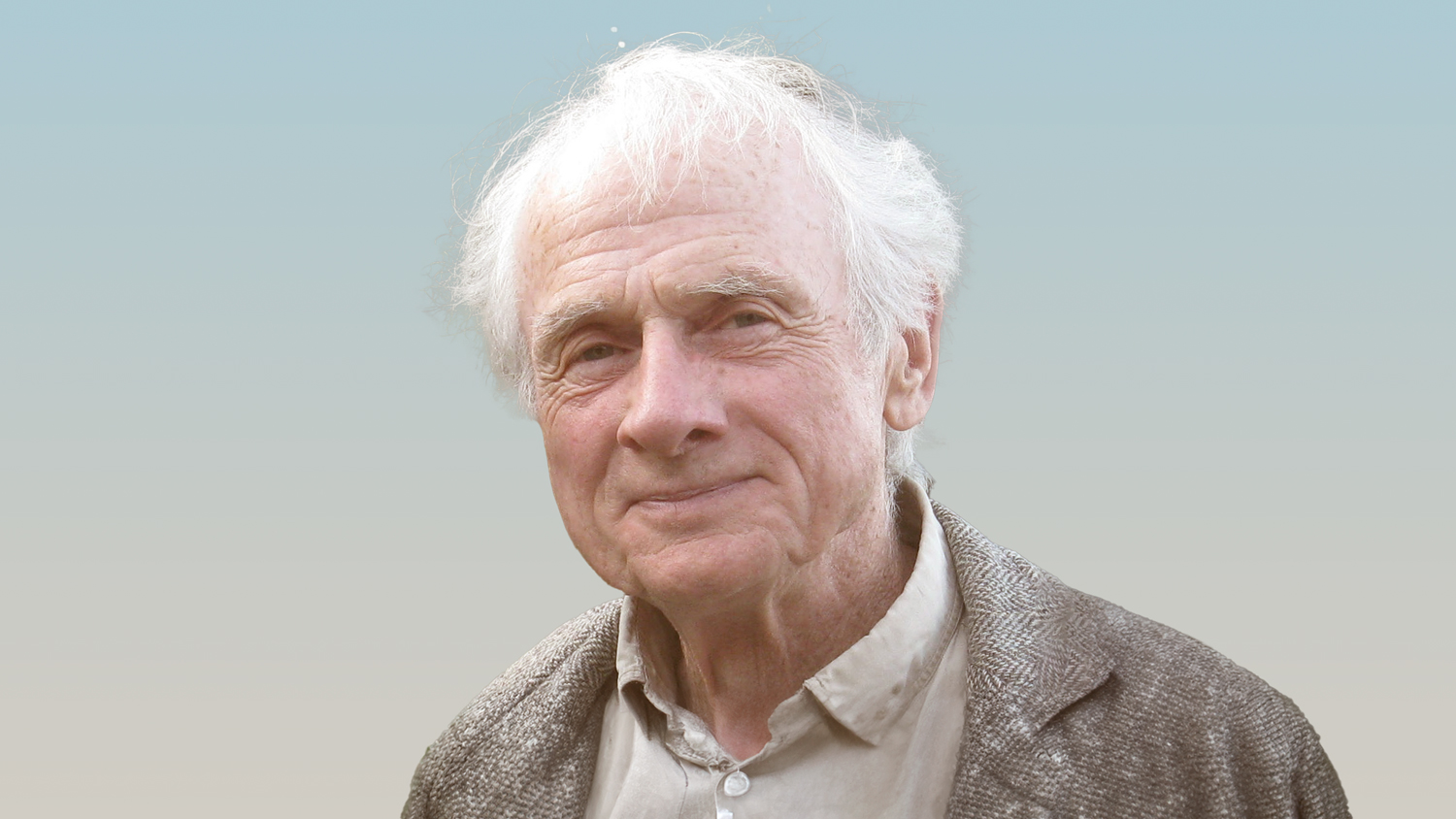
Erik Fraser Storlie, PhD, a student of the Zen Masters Shunryu Suzuki and Dainin Katagiri, helped found the Minnesota Zen Meditation Center in 1972. He taught English and Humanities for 35 years at Minneapolis Community and Technical College and, after retirement, developed and taught courses in Meditation and Mindfulness for 19 years at the Bakken Center for Spirituality and Healing at the University of Minnesota. See his memoirs Nothing on My Mind: Berkeley, LSD, Two Zen Masters (Shambhala 1996); and Go Deep and Take Plenty of Root: A Prairie-Norwegian Father, Rebellion in Minneapolis, Basement Zen (2013).
References
Dillard, Annie. In William E. Coles, Jr., Seeing Through Writing. Harper & Row: New York, 1988, p. 183.
Emerson, Ralph Waldo. In Sedgwick, John. From the River to the Sea: The Untold Story of the Railroad War that Made the West. Avid Reader Press: New York: 2021, p. 42.
Griffiths, Roland.
https://www.hopkinsmedicine.org/press_releases/2006/griffithspsilocybin.pdf
Hillman, James. “The Practice of Beauty.” In Bill Beckley, ed., Uncontrollable Beauty: Toward a New Aesthetics. Allworth Press: New York, 1998, p. 262.
Huxley, Aldous. The Doors of Perception and Heaven and Hell. Harper Colophon: New York, 1963, pp. 17-19.
Queen Victoria and the Railroad.
http://the-history-girls.blogspot.com/2017/06/queen-victoriasfirst-railway-journey.html
Reps, Paul and Nyogen Senzaki. Zen Flesh, Zen Bones: A Collection of Zen and Pre-Zen Writings. Tuttle: North Clarendon VT, 1985, pp. 143-144 & 121-122.
Smith, Huston. Cleansing the Doors of Perception: The Religious Significance of Entheogenic Plants and Chemicals. Tarcher/Putnam: New York, 2000, p. 101.
Wilson, Bill.
https://www.inverse.com/mind-body/alcoholics-anonymous-lsd-bill-wilson
RELATED CONTENT
Brainforest Café
SEASON 1 EPISODE 9 | 01:21:18 | MARCH 18, 2024
A conversation with Erik Storlie