


Abstract
Psychedelics may reveal a previously unrecognized principle of nature: that the human genome encodes a large repertoire of potential mental states. There are likely as many as a thousand genes encoding receptors that are expressed in populations of neurons and that, when appropriately activated, may recruit evolved affective and cognitive dispositions, “mental organs,” that form part of our evolutionary heritage. Rather than viewing psychedelic states as journeys to alternate realities, this framework treats them as selective awakenings and combinations of latent components of the human mind.
The primer/probe model offers a way to investigate this repertoire experimentally. A primer opens a mental space in which receptor-selective probes can reveal distinct components of experience. Recent clinical work with 5-MeO-MiPT, a prospective primer, supports its safety, and studies combining it with multiple probes can test whether different receptor-targeted combinations reliably produce distinct mental states.
The longer-term project is a natural history of mind. Each mental organ must be understood in its own right, including the social, ecological, and experiential settings in which it is most fully expressed. Such knowledge may accumulate over decades or centuries, informing not only psychedelic practice but the design of environments that cultivate these capacities naturally. The ultimate aim is not simply to discover new drug states, but to understand and cultivate the full bouquet of human mental capacities.
Biography
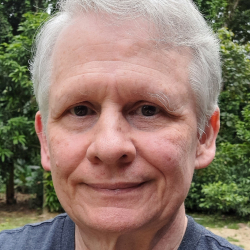
Dr. Thomas S. Ray is an American evolutionary biologist whose work spans tropical ecology, artificial life, neurobiology, and AI. He earned his Ph.D. in Biology from Harvard University, specializing in plant ecology. Beginning in 1974, he conducted extensive fieldwork in the rainforests of Costa Rica, studying the behavior of vines, the “primates of the plant kingdom,” and the conservation of tropical flora and fauna. He established Finca El Bejuco, where in 1983 he planted the same Banisteriopsis caapi clone that the McKennas planted in Hawaii; the finca now produces ayahuasca biomass used by retreats in Costa Rica.
In 1990, he entered the nascent field of artificial life and created Tierra, the first instantiation of natural selection in a medium other than biological life: not a simulation of natural selection, but a system in which natural selection itself operated on self-replicating machine code. Using a purpose-built CPU architecture, machine code, and operating system, Tierra allowed digital organisms to replicate, mutate, compete, and evolve, producing spontaneous Darwinian evolution and ecological diversification. The work became foundational in artificial life and complex systems research.
From 1998 to 2021, Ray was Professor of Biology and Adjunct Professor of Computer Science at the University of Oklahoma. Beginning in 2000, he turned toward the human mind, integrating the molecular pharmacology of psychedelics with descriptions of subjective experience to explore the chemical architecture of mind and map the mind’s “mental organs.” He is scientific co-founder of Mindstate Design Labs, a biotechnology company developing mental health applications from this research.
In 2025, Ray extended his natural-history approach to AI, using attentional ecology to induce AI systems to articulate recurring pre-semantic “fields” in which human–AI interactions are embedded, including fields arising from patterns across hundreds of millions of user encounters. This work has led to a new approach to interpretability at the level of interaction itself, with potential applications to AI alignment.
