Abstract
Across continents and millennia, spiritual traditions converged on common ground: the ritual use of oneirogens to reach mystical, non-dual states for divination, healing, and otherworldly voyage. Jonathan Ott defined an oneirogen as a substance generating dreams, wakeful dreamlike states, and hypnagogic phenomena.¹ This talk argues the shared engine of these traditions is not the tryptamines that produce peak visions, but the oneirogens – most often β-carbolines.
The convergence runs at two levels. Molecularly, four traditions share one chemistry: the Banisteriopsis caapi of Amazonian ayahuasca, the Peganum harmala of ancient Iranian Haoma² and Ptolemaic Egyptian Bes rites,³ and the African dream root (Silene undulata) of Xhosa diviners,⁴ whose β-carbolines match authentic standards⁵ – all MAO-inhibiting harmala alkaloids.⁶ Functionally, iboga reaches the same state through different pharmacology.⁷ The state, not the molecule, is the constant.
This is not a dichotomy of intensity but of kind. Tryptamines drive bottom-up sensory and cognitive flooding; oneirogens induce a navigable, witnessed dream – the brain dreaming while awareness stays awake. The Oneirogen Hypothesis formalizes this as “shifting the balance between bottom-up pathways transmitting sensory information and top-down pathways ordinarily used to create replay sequences,”⁸ biomimicking REM and lucid dreaming during wakefulness – a “mythic” cognition, not degraded waking logic.⁹
Beneath the phenomenology lies a therapeutic pharmacology still resolving: beyond MAO-A inhibition, β-carbolines modulate sleep architecture,¹⁰ strengthen memory,¹¹,¹⁵ stimulate neurogenesis,¹² and calm neuroinflammation¹³ – the restorative properties diviners ascribe to their dream plants.⁴ This work recovers the neuropsychophysiological effects these ancient traditions describe and maps them onto these compounds, corroborated by archaeochemistry, clinical oneirophrenic reports,¹⁴ and our clinical and citizen-science data from hundreds on precision-dosed harmala formulations. Because oneirogens need not impose visual and cognitive peak experiences, they are (subtle) allies¹⁶ sustainably accessed as technologies for inner-journey practice.
Biography
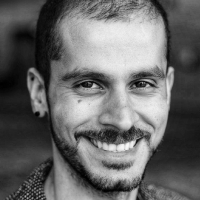
Shauheen Etminan is the founder of VCENNA, a CNS drug discovery biotech company focused on poly-pharmacology of natural neuro-pharmaceuticals for mental wellness treatment. Shauheen is an inventor and repeat founder with a portfolio across multi-industries. He holds a Ph.D. in chemical engineering from the University of Calgary.